50 Results for "

Lepidium sativum L.

" in MedChemExpress (MCE) Product Catalog:
Products (50)

50 Results for "Lepidium sativum L." in MCE Product Catalog:

2
2 Cited Publications
Cat. No.: HY-N7036
CAS No.: 90-19-7
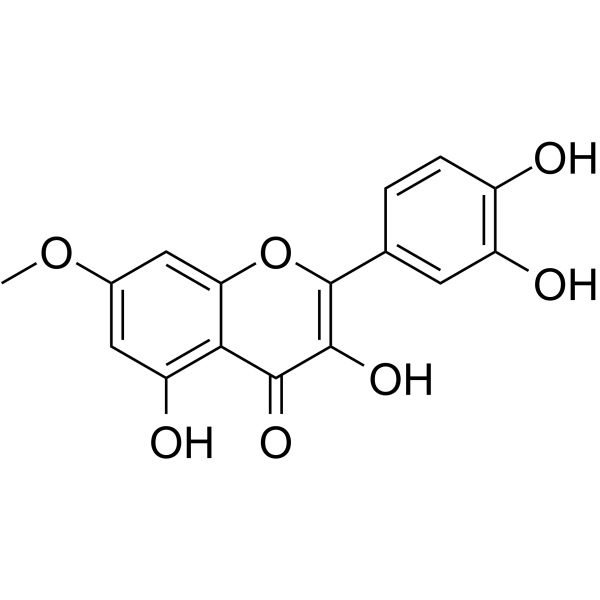
Rhamnetin is a quercetin derivative found in Coriandrum sativum, inhibits secretory phospholipase A2 and histone deacetylase 2 (HDAC2). Rhamnetin exhibits antitumor, antioxidant and anti-inflammatory activity .
loading...
    loading...
2
2 Cited Publications
Cat. No.: HY-N2365
CAS No.: 74058-71-2
Synonyms: N-Benzylpalmitamide; N-Benzylhexadecanamide; Macamide 1
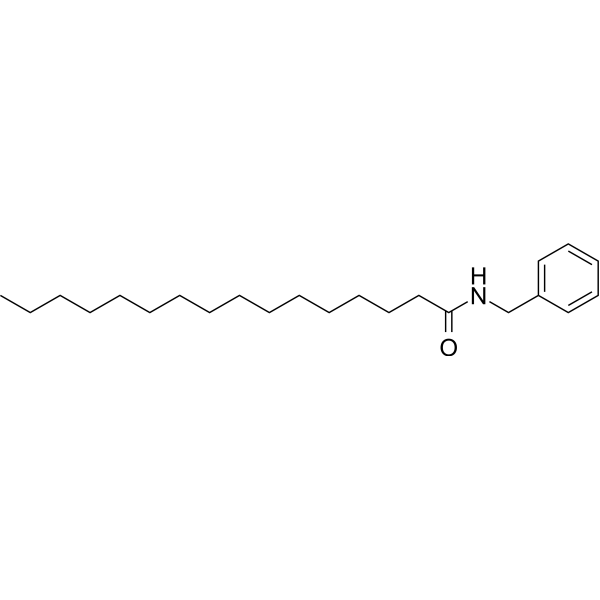
Macamide B (N-Benzylhexadecanamide; Macamide 1) is a macamide isolated from Lepidium meyenii, acts as an inhibitor of fatty acid amide hydrolase (FAAH).
loading...
    loading...
1
1 Cited Publications
Cat. No.: HY-W027951
CAS No.: 534-13-4
Synonyms: DMTU
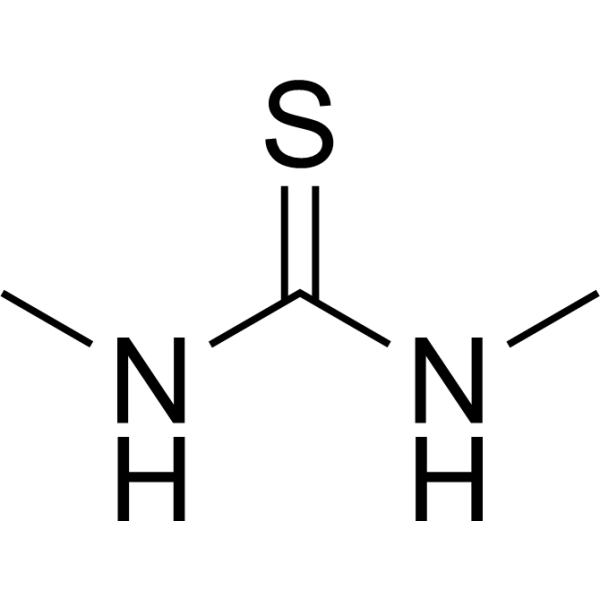
N,N'-Dimethylthiourea (DMTU), isolated from Allium sativum, is an orally active scavenger of hydroxyl radical (•OH) and blocks •OH production by activated neutrophils in vitro. N,N'-Dimethylthiourea protects against water-immersion restraint stress (WIRS)-induced gastric mucosal lesions in rats by exerting its antioxidant action including •OH scavenging and anti-inflammatory action .
loading...
    loading...
1
1 Cited Publications
Cat. No.: HY-113362
CAS No.: 593-39-5
Purity:  ≥98.0%
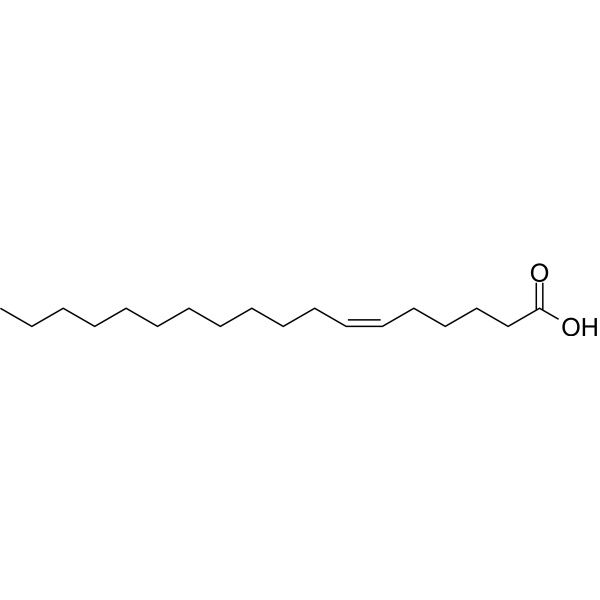
Petroselinic acid, a positional isomer of oleic acid, is isolated from the vegetable oil of Coriandrum sativum fruits. Petroselinic acid is used as substrate for sophorolipid fermentation. Petroselinic acid inhibits the biofilm formation in microorganisms, exhibits antibacterial and antifungal activities. Petroselinic acid is orally active [4.
loading...
    loading...
1
1 Cited Publications
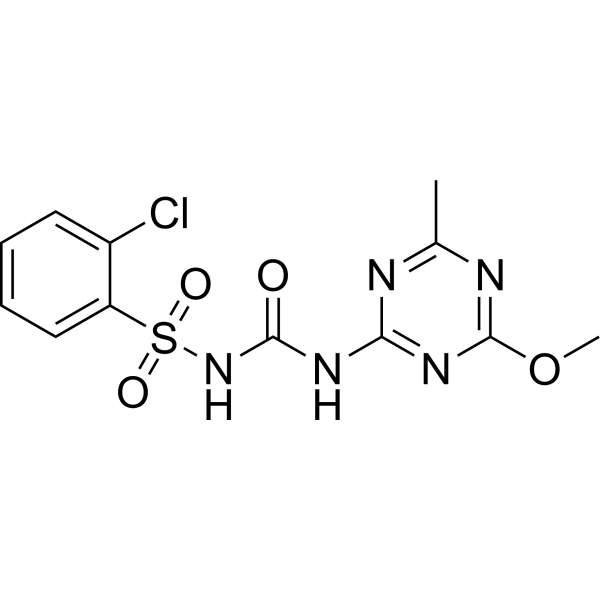
Cat. No.: HY-119737
CAS No.: 64902-72-3
Purity:  99.95%
Chlorsulfuron is an acetolactate synthase inhibitor and selective systemic herbicide. Chlorsulfuron blocks the synthesis of branched-chain amino acids (valine and isoleucine), thereby inhibiting protein synthesis, cell growth, and cell division. Chlorsulfuron blocks G1 and G2 phase cell cycle progression in plant root tip cells without directly interfering with mitosis or DNA synthesis. Chlorsulfuron completely inhibits germination of non-target terrestrial plants and is highly toxic to aquatic macrophytes. Chlorsulfuron has low toxicity to mammals, birds and bees, and moderate toxicity to fish and aquatic invertebrates. Chlorsulfuron can be used in studies related to herbicides, plant cell cycles and ecotoxicology .
loading...
    loading...
1
1 Cited Publications
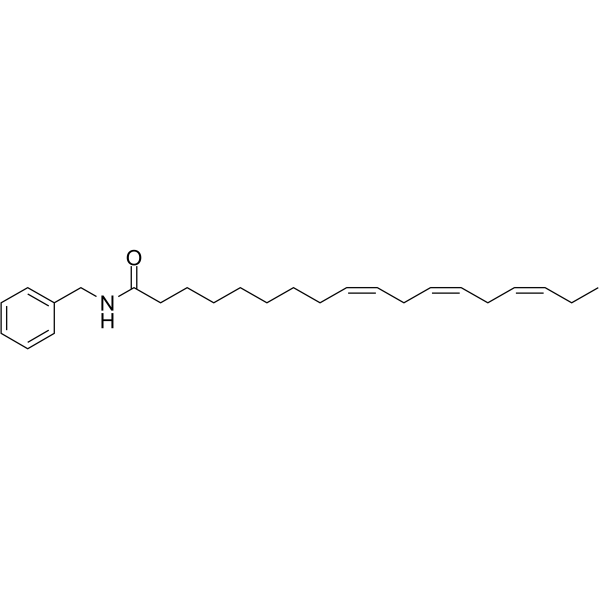
Cat. No.: HY-N3033
CAS No.: 883715-18-2
N-​Benzyllinolenamide is a natural macamide isolated from Lepidium meyenii, acts as an inhibitor of fatty acid amide hydrolase (FAAH) with an IC50 of 41.8 μM .
loading...
    loading...
1
1 Cited Publications
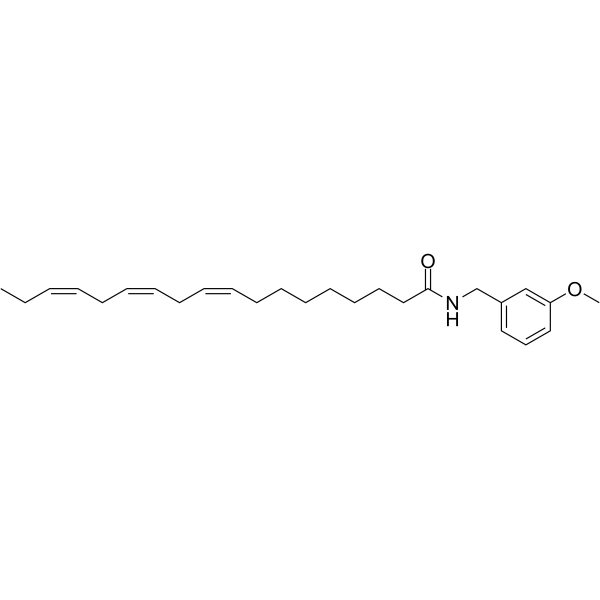
Cat. No.: HY-N7702
CAS No.: 883715-23-9
N-(3-Methoxybenzyl)-(9Z,12Z,15Z)-octadecatrienamide is a macamide isolated from Maca (Lepidium meyenii Walp.) N-(3-Methoxybenzyl)-(9Z,12Z,15Z)-octadecatrienamide induces mesenchymal stem cells osteogenic differentiation and consequent bone formation through activating the canonical Wnt/β‐catenin signaling pathway. N-(3-Methoxybenzyl)-(9Z,12Z,15Z)-octadecatrienamide can be used for the research of osteoporosis .
loading...
    loading...
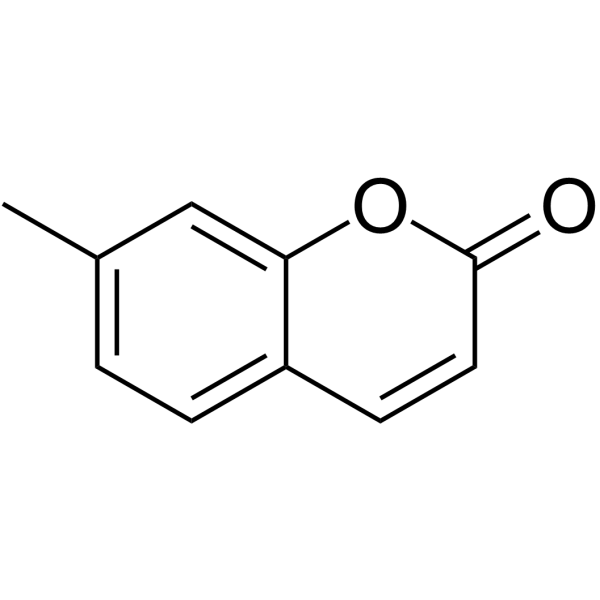
Cat. No.: HY-N5092
CAS No.: 2445-83-2
7-Methylcoumarin is a coumarin derivative with potent hepatoprotective and antioxidant properties. 7-Methylcoumarin is a mechanism-based inhibitor for CYP2A6. 7-Methylcoumarin significantly decreases alanine aminotransferase (ALT), aspartate aminotransferase (AST), and serum bilirubin (TB) in rats with CCl4-induced liver damage, whilst restoring total protein (TP) and albumin (TA) levels in serum as well as preventing oxidative stress. 7-Methylcoumarin can decline mitotic activity of A. sativum promeristem .
loading...
    loading...
Cat. No.: HY-134900
CAS No.: 34135-85-8
Purity:  40.00%
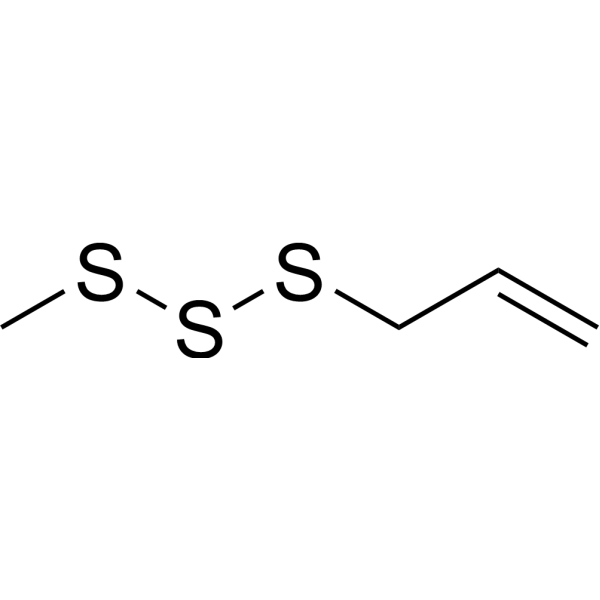
Allyl methyl trisulfide is a volatile organic compound and a component of garlic (Allium sativum L.) essential oil, which has antibacterial, antioxidant and antitumor activities .
loading...
    loading...
Cat. No.: HY-W018197
CAS No.: 103-81-1
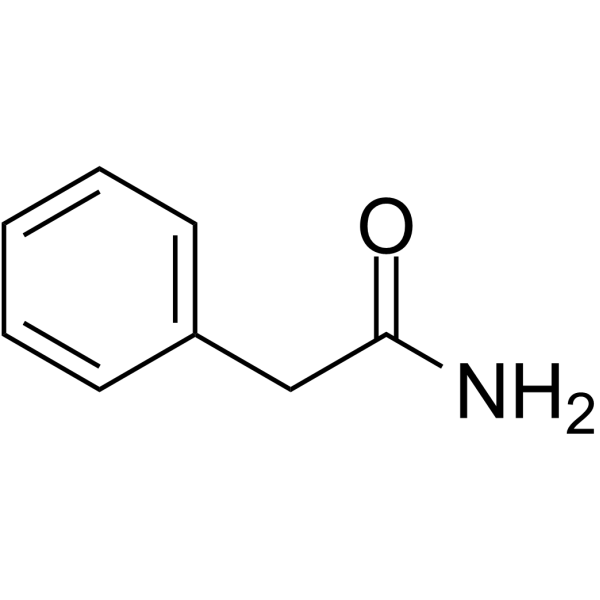
2-Phenylacetamide is a estrogen-like compound that can be isolated from Lepidium apetalum seeds. 2-Phenylacetamide inhibits p38 MAPK signaling pathway, exhibits anti-inflammatory, antioxidant, anti-hypertensive, and anti-fibrosis effects. 2-Phenylacetamide is orally active .
loading...
    loading...
Cat. No.: HY-N3045
CAS No.: 20186-22-5
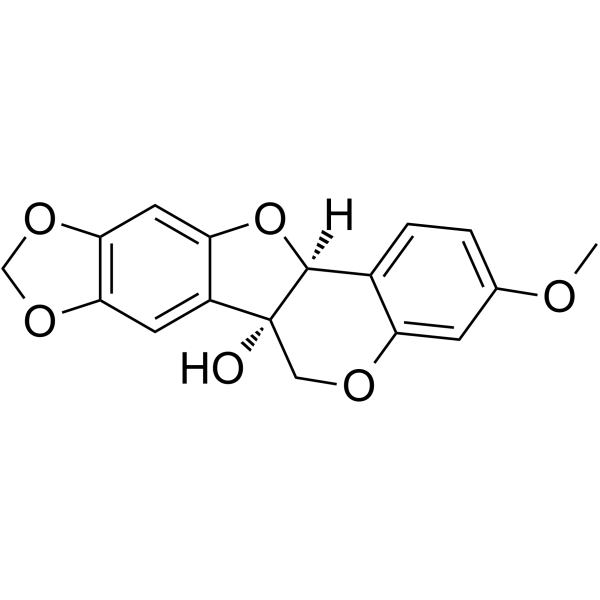
(S,S)-Pisatin is a dimeric pterocarpan derivative. (S,S)-Pisatin can inhibit plant growth .
loading...
    loading...
Cat. No.: HY-W004301
CAS No.: 112-54-9
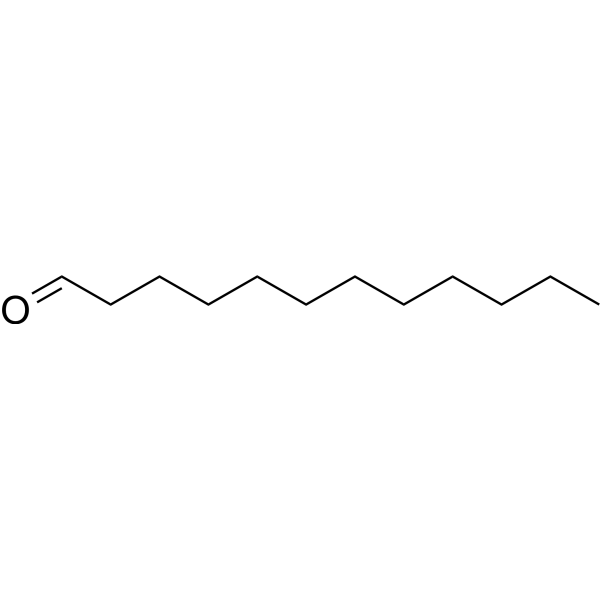
Dodecanal is composition of essential oil that can be found in Coriandrum sativum L.
loading...
    loading...
Cat. No.: HY-NP078A
Synonyms: PSA (FITC)
Pisum sativum Agglutinin (PSA) FITC is a plant lectin conjugated with FITC (HY-66019). Pisum sativum Agglutinin FITC serves as an acrosome stain for detecting the acrosomal status of sperm. Pisum sativum Agglutinin exhibits lymphocyte mitogenic and immunomodulatory activities .
loading...
    loading...
Cat. No.: HY-E70425
CAS No.: 9030-05-1
Target:  

Glycosyltransferase

Research Areas:  

Metabolic Disease

Sucrose synthase belongs to glycosyltransferases and is a reversible catalyst present in plants, which catalyzes the conversion of sucrose into fructose and UDP-G or ADP-G. Sucrose synthase localizes to the cytoplasm, plasma membrane, cell wall, vacuole and mitochondria of plants. Sucrose synthase regulates sugar metabolism, supports the development of taproots, fruits, seeds and vascular tissues, drives the synthesis of starch, cellulose and callose, and enhances nitrogen fixation capacity. Sucrose synthase mediates signal transduction in plant meristems. Sucrose synthase is associated with plant growth, anaerobic stress tolerance, as well as shoot apical meristem and leaf morphology; overexpression of this enzyme promotes plant growth, increases xylem size, and elevates cellulose and starch contents .
loading...
    loading...
Cat. No.: HY-N4188
CAS No.: 5327-45-7
Synonyms: N-Benzylstearamide
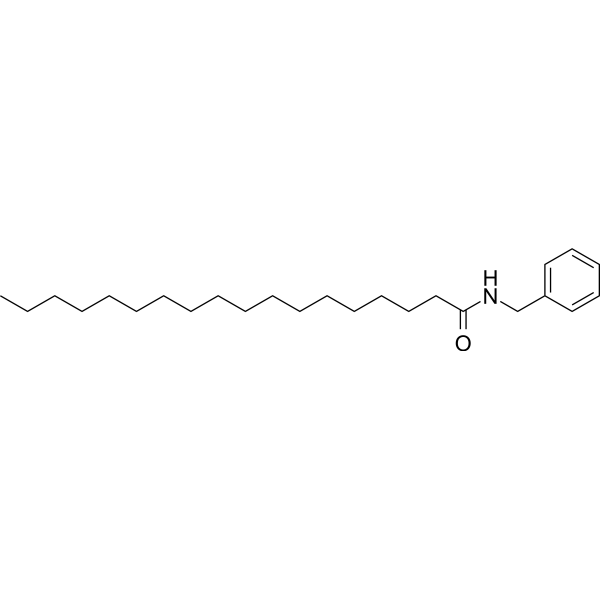
N-Benzyloctadecanamide (N-Benzylstearamide) is a macamide, a distinct class of secondary metabolites in Lepidium meyenii Walp. (Maca) .
loading...
    loading...
Cat. No.: HY-W403075
CAS No.: 1429659-99-3
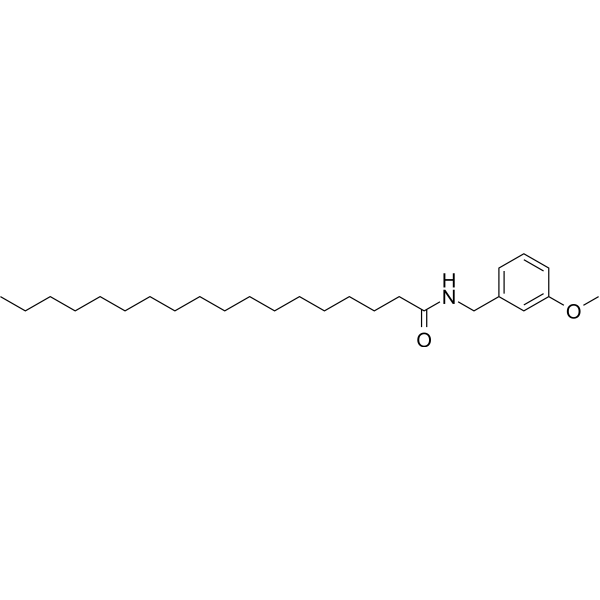
N-(3-Methoxybenzyl)stearamide a natural product from Lepidium meyenii (Maca), inhibits human and mouse soluble epoxide hydrolase (hsEH and msEH) with IC50s of 0.001 and <0.001 μg/nM, respectively .
loading...
    loading...
Cat. No.: HY-N2361
CAS No.: 18286-71-0
Target:  

Others

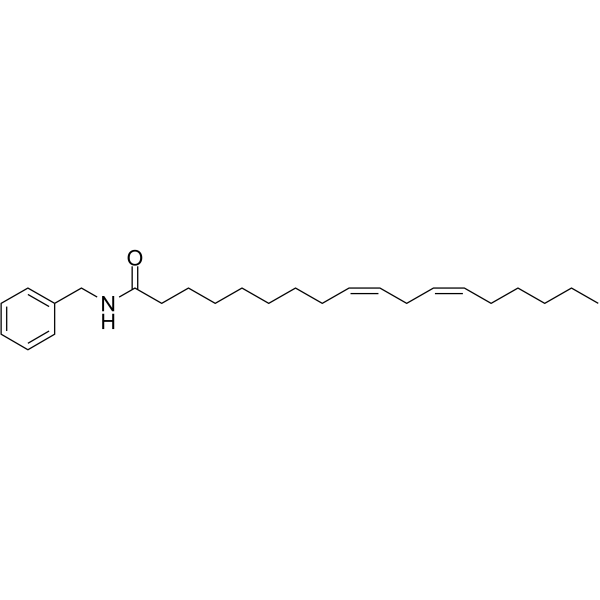
N-Benzyllinoleamide can be isolated from Lepidium meyenii Walp., has pharmaceutical property against exercise-induced fatigue .
loading...
    loading...
Cat. No.: HY-N6923
CAS No.: 883715-21-7
Synonyms: MAC 18:1
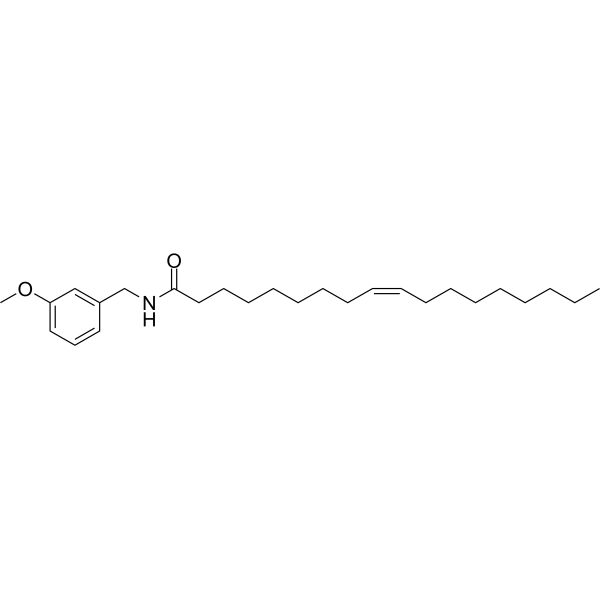
N-(3-Methoxybenzyl)oleamide (MAC 18:1) is an individual macamide. N-(3-Methoxybenzyl)oleamide can be isolated from Lepidium meyenii (maca) .
loading...
    loading...
Cat. No.: HY-N2365R
CAS No.: 74058-71-2
Synonyms: N-Benzylpalmitamide (Standard); N-Benzylhexadecanamide (Standard); Macamide 1 (Standard)
Macamide B (Standard) is the analytical standard of Macamide B. This product is intended for research and analytical applications. Macamide B (N-Benzylhexadecanamide; Macamide 1) is a macamide isolated from Lepidium meyenii, acts as an inhibitor of fatty acid amide hydrolase (FAAH).
loading...
    loading...
Cat. No.: HY-W741940
CAS No.: 508-93-0
Evomonoside is a type of cardiac glycoside compound. Evomonoside exhibits significant in vitro anticancer activity, especially having nanomolar inhibitory concentrations against gastric cancer cell lines. Evomonoside has typical cardiac toxicity risks, including arrhythmias and conduction abnormalities. Evomonoside can be used for research on gastric cancer .
loading...
    loading...

